

How Long to Keep Tax Records: IRS Guidelines for 2026
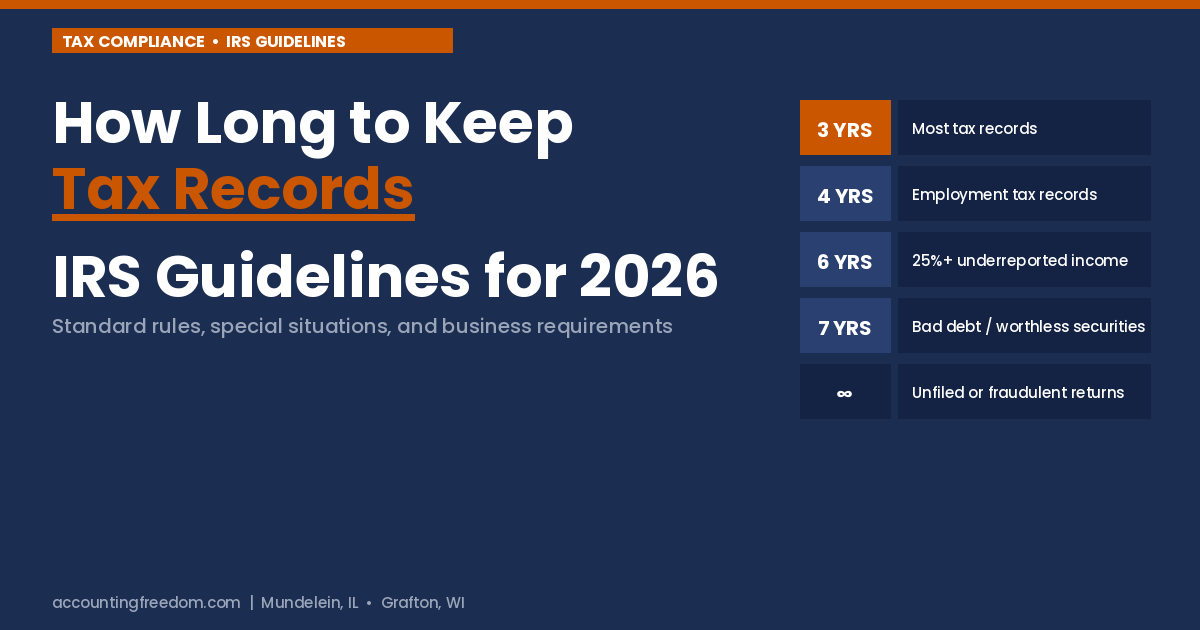
Last updated [PUBLISH DATE], 2026 — Knowing how long to keep tax records is one of those questions every taxpayer eventually asks — usually while staring at a filing cabinet full of old receipts, wondering what’s safe to shred. Tax compliance isn’t getting any easier. Keeping the right records for the correct amount of time protects you in case of an IRS audit, amended return, or refund claim. For most taxpayers, the IRS recommends retaining 2026 tax returns and supporting documents for at least three years. Certain situations, however, require longer retention periods.
Below is a clear breakdown of IRS tax retention rules and special circumstances. It also covers best practices for storing and disposing of tax documents. As always, consult your tax preparer for guidance specific to your situation. See our Tax Preparation & Planning Services for year-round support.
The short version: Knowing how long to keep tax records depends on the situation. Keep most tax records for three years after filing. If you underreported income by more than 25%, however, extend that to six years for the related records. Records for bad debt deductions or worthless securities need seven years. Meanwhile, property and investment records should be kept for as long as you own the asset, plus three years after selling. Finally, records tied to unfiled or fraudulent returns should be kept indefinitely — there’s no statute of limitations protection in those cases.
Standard IRS Tax Record Retention Period: Three Years
The general IRS rule is to keep your tax return and all supporting documentation for at least three years after filing your 2026 return. This timeframe aligns with the IRS statute of limitations for audits and allows you to file an amended return or claim a refund if needed.
Tax Documents to Keep for Three Years
- W-2s, 1099s, and other income statements
- Receipts for deductible expenses
- Bank and brokerage statements
- Mortgage interest and property tax records
- Proof of charitable contributions
Extended Retention for Special Situations, Property, and Businesses
Certain tax situations, asset ownership, and business activities require keeping records longer than the standard three-year period to support income reporting, deductions, depreciation, and capital gains calculations.
Retention Periods at a Glance
| Retention Period | When It Applies |
|---|---|
| 3 years | Standard rule for most tax returns and supporting documents |
| 4 years | Employment tax records, from the date the tax becomes due or is paid, whichever is later |
| 6 years | If you underreport income by more than 25% of your gross income — the IRS can audit up to six years after filing |
| 7 years | Records related to bad debt deductions or worthless securities |
| Indefinitely | Unfiled or fraudulent returns, and records that establish property basis |
Property and Investment Records
Keep records related to real estate, rental properties, and investments for as long as you own the asset, plus at least three years after selling or disposing of it. These records support:
- Capital gains or losses
- Depreciation and amortization
- Property improvements and adjustments to basis
Business and Self-Employment Tax Records
If you’re self-employed or own a business, additional documentation should be retained beyond three years to support deductions and employment taxes.
Employment Tax Records
Keep employment tax records for at least four years after the tax becomes due or is paid, whichever is later.
Additional Business Records to Retain
- Invoices and receipts
- Cancelled checks and bank records
- Mileage logs
- Contracts and agreements
- Records related to depreciation or ongoing deductions
State Tax Record Retention Rules
State tax agencies may require longer retention periods than the IRS. Many states have audit windows of four to five years. Extended timeframes often apply for unreported or fraudulent income. Always verify current requirements directly with the Illinois Department of Revenue or the Wisconsin Department of Revenue, since these windows can change.
Final IRS Recordkeeping Recommendation
The IRS generally advises keeping tax records for at least three years from the date you filed your return, or two years from the date you paid the tax — whichever is later. Following these guidelines helps ensure you’re prepared for audits, amended returns, or refund claims. It also keeps you from holding onto unnecessary paperwork.
For the IRS’s own guidance, see their record retention guidelines.
How to Store Tax Records So You Can Actually Find Them Later
Knowing how long to keep tax records only helps if you can locate them when you need them. A digital, organized system beats a growing pile of paper every time. This matters most when an audit notice arrives with a specific deadline to respond.
- Scan paper documents as you receive them. A phone camera and a dedicated folder structure — by year, then by category — turns hours of searching into seconds.
- Keep digital and physical originals of anything with a signature. Contracts, deeds, and certain legal documents are worth keeping in original form even if you also scan them.
- Back up digital records in at least two places. A cloud storage service plus a local backup protects you if one system fails.
- Label folders by retention period, not just by year. A folder marked “Keep Until 2033” is more useful than one marked “2026 Taxes” when you’re deciding what to shred five years from now.
- Shred, don’t just delete. Physical documents with Social Security numbers, account numbers, or other sensitive data should be cross-cut shredded once their retention period has passed.
Consequently, the businesses and individuals who stay organized year-round spend far less time scrambling during tax season — and far less time worrying during an audit.
If you’re not sure whether you’re holding onto the right records — or too many of the wrong ones — that’s a quick conversation with your advisor. Use our pricing calculator to see what ongoing tax support costs, or schedule a free consultation to talk through your specific situation.
Not sure what to keep — or what you can finally shred?
A quick conversation with your advisor can save filing cabinets of paper and years of unnecessary worry.
Schedule a Free Consultation Tax Preparation & PlanningDisclaimer: This article is provided for general informational purposes only and does not constitute tax, legal, accounting, or financial advice. Every situation is different. Please consult your tax preparer for guidance specific to your records and filing history. Reach out to Accounting Freedom for guidance specific to your situation.
About the Author
Frank Fiore, CPA — President & Visionary, Accounting Freedom
Frank Fiore has spent 20+ years helping small business owners in Illinois and Wisconsin navigate recordkeeping, tax compliance, and audit preparedness. Accounting Freedom serves clients from offices in Mundelein, IL and Grafton, WI.